Horse Chestnut (Aescin) in Cardioflush: Dose vs. Trial Evidence for Circulation Support
Quick Answer: Does Cardioflush Contain a Trial-Matching Dose of Horse Chestnut?
Unknown, and it cannot currently be verified. Cardioflush's printed Supplement Facts panel lists Horse Chestnut (Aesculus hippocastanum) Extract, standardized to greater than 20% Aescin, as the second ingredient in a 195mg "Proprietary Blend" of six botanicals. The label prints only that one combined total; it does not print how many of those 195 milligrams are horse chestnut extract. The clinical trials behind horse chestnut's reputation for circulation support used a specific, disclosed, standardized dose — typically around 100mg of aescin per day. Because Cardioflush's entire six-ingredient blend totals less than double that trial amount, and horse chestnut is only one of six ingredients sharing that total, a buyer has no way to know from the label whether this bottle is anywhere near the studied dose.
- What's on the label: Horse Chestnut Extract, >20% Aescin, inside a 195mg blend with five other botanicals.
- What's not on the label: the milligram amount of horse chestnut extract itself.
- What the trials used: a standardized extract delivering roughly 100mg of aescin daily, usually split into two doses.
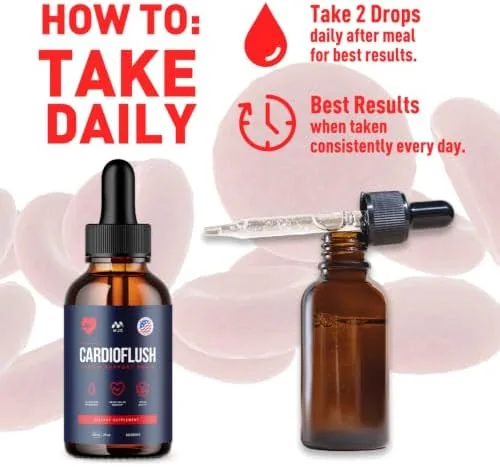
What Cardioflush's label actually says about horse chestnut
Cardioflush is sold as "CARDIOFLUSH — CARDIO SUPPORT DROPS," a liquid dietary supplement distributed by MJO of Sheridan, Wyoming, in an amber glass bottle with a dropper. The printed Supplement Facts panel gives a serving size of 2ml (two droppers), with 30 servings in each 60mL (2 fl oz) bottle. Underneath that serving size sits a single line: "Proprietary Blend — 195mg," followed by the six botanicals it contains, listed in this printed order: Grape Seed (Vitis vinifera) Extract [>95% Proanthocyanidins], Horse Chestnut (Aesculus hippocastanum) Extract [>20% Aescin], Motherwort (Leonurus japonicus whole herb) Extract, Hawthorn Berry (Crataegus asiatica aerial) Extract, Gotu Kola (Centella asiatica aerial) Extract, and Butcher's Broom (Ruscus aculeatus leaf/stem) Extract.
Two of those six ingredients carry a printed standardization: Grape Seed at greater than 95% proanthocyanidins, and Horse Chestnut at greater than 20% aescin. That second figure, ">20% Aescin," tells you the concentration of the active-compound fraction within the horse chestnut extract itself — it does not tell you how many milligrams of that extract are actually in the bottle. A concentration percentage and an absolute dose are two different pieces of information, and the label only discloses the first one. Under U.S. supplement labeling rules, a "proprietary blend" is allowed to disclose only the combined weight of its ingredients, not the individual amounts, as long as the ingredients are listed in descending order by weight — which is exactly the format used here. Horse chestnut's position second on the list suggests it is present in a larger amount than the four ingredients listed after it, but that is an ordering rule, not a milligram figure.
What horse chestnut extract and aescin actually are
Horse chestnut (Aesculus hippocastanum) is a large flowering tree native to the Balkans, long used in European herbal medicine for leg swelling and varicose-vein symptoms. The seed contains a mixture of triterpene saponins collectively called aescin (also spelled escin), which is considered the extract's primary active fraction. Aescin is thought to work by tightening the walls of veins and capillaries and reducing the leakiness that lets fluid seep into surrounding tissue — the process behind the heavy, swollen feeling associated with chronic venous insufficiency. This is a distinct mechanism from Cardioflush's other five ingredients, and it is the reason horse chestnut extract, specifically standardized for aescin content, has its own clinical-trial literature separate from the other botanicals on the label.
It's worth being precise about a safety distinction here too: raw, unprocessed horse chestnut seed also contains a compound called esculin, which is toxic and must be removed during processing. Every study discussed below used a standardized, processed pharmaceutical-grade extract, not raw seed — the same category of ingredient the Cardioflush label describes with its ">20% Aescin" standardization.
What the clinical trials actually used and found
The most authoritative summary of horse chestnut seed extract research is a Cochrane systematic review, most recently updated in 2012, which pooled 17 randomized, placebo-controlled or comparator trials in people with chronic venous insufficiency.[1] An earlier, separate criteria-based systematic review by the same lead author, published in 1998, reached a similar conclusion using a smaller set of trials.[2] Across the trials the Cochrane review examined, the standardized extract most commonly used delivered roughly 50mg of aescin per dose, taken twice daily — about 100mg of aescin across a full day. That aescin amount was typically packaged as roughly 300mg of horse chestnut seed extract standardized to somewhere in the 16–21% aescin range, taken twice daily, which lines up with the general strength range that Cardioflush's own ">20% Aescin" standardization sits within.
Using that dosing pattern, the Cochrane review reported that horse chestnut seed extract reduced leg pain, and modestly reduced leg volume and edema (fluid swelling), compared with placebo. Several of the included trials also compared horse chestnut extract against a reference treatment, external compression stockings, and reported broadly comparable symptom improvement between the two approaches over several weeks. The review authors were careful to flag that a number of the included trials had shortcomings in their methodology and were not large by modern standards, and they explicitly called for larger, better-designed studies rather than treating the evidence as settled. That is a meaningfully positive signal for standardized horse chestnut extract as a category — but it is a signal tied to a specific, disclosed daily aescin amount, not to horse chestnut in general at any amount.
Trial dose vs. what Cardioflush discloses
| Amount | Disclosed on label? | |
|---|---|---|
| Aescin used per day in the pooled Cochrane trials | ~100mg (commonly ~50mg twice daily) | — |
| Horse chestnut extract typically providing that aescin amount | ~300mg twice daily, standardized to 16–21% aescin | — |
| Cardioflush's entire six-ingredient proprietary blend | 195mg total, per 2ml serving | Yes, as a blend total |
| Cardioflush's horse chestnut extract specifically | Not stated | No — only the >20% aescin standardization is printed, not a milligram amount |
The arithmetic is worth sitting with. The trial doses that produced the Cochrane review's findings totaled roughly 600mg of standardized extract a day, on its own. Cardioflush's entire proprietary blend — horse chestnut plus five other botanicals combined — totals 195mg for the whole day's serving. That does not prove the horse chestnut portion is too low to matter; a highly concentrated extract can deliver meaningful aescin in a smaller weight of material, and extract-to-extract potency varies. But it does mean there is no published number on this label that lets a buyer calculate how the horse chestnut in this bottle compares with the horse chestnut used in the trials. That gap is the honest answer to "does Cardioflush contain a clinical dose of horse chestnut" — nobody outside the manufacturer currently has the information to answer it.
Safety and interaction notes
In the trials reviewed by Cochrane, standardized horse chestnut seed extract was generally well tolerated, with the most commonly reported side effects being mild gastrointestinal upset, dizziness, headache, nausea or itching. Rates of these effects were generally similar to placebo across most trials. That safety profile applies to the standardized, aescin-quantified extract used in research — it is not a safety statement about Cardioflush as a finished six-botanical liquid blend, which has not itself been through a clinical trial.
Cardioflush's own label carries a general caution: "Check with your doctor before using this product if you are using medication or have any medical conditions." That is a reasonable instruction to take seriously rather than skip past, particularly because several of the other five botanicals in the same blend — discussed in our companion articles on reading Cardioflush's proprietary blend label and on gotu kola and butcher's broom evidence — also touch circulation and clotting pathways. Horse chestnut extract in particular has a theoretical interaction with anticoagulant and antiplatelet medications given its effect on vein and vessel walls; anyone taking blood thinners should raise this specific ingredient with a pharmacist or physician before starting a horse-chestnut-containing product, rather than relying on the label's general caution alone.
Where the evidence stops
Two limits are worth stating plainly, because they apply specifically to horse chestnut and not just to the blend as a whole. First, no clinical trial has tested Cardioflush itself, or any product combining horse chestnut with grape seed, motherwort, hawthorn, gotu kola and butcher's broom in a single 195mg blend — the research discussed above is on horse chestnut extract alone, dosed on its own. Second, and specific to this label: a proprietary blend format legally permits withholding individual ingredient amounts, and Cardioflush's manufacturer has exercised that option for all six ingredients. That is common industry practice, not unique to this product, but it means the single most useful number for judging whether this bottle matches the horse chestnut research — the milligrams of horse chestnut extract per serving — is simply not published anywhere we could find, including on the Amazon listing where this product is sold.
Medical note: this article is general information, not medical advice, and it describes research on an isolated, standardized horse chestnut extract — not a verified claim about Cardioflush itself. Speak to a healthcare professional before starting any new supplement, especially if you are pregnant, nursing, taking blood thinners or blood-pressure medication, or managing a liver or kidney condition. Cardioflush's own label advises checking with a doctor before use if you take medication or have a medical condition.
Scientific references
- Pittler MH, Ernst E — Horse chestnut seed extract for chronic venous insufficiency, Cochrane Database of Systematic Reviews, 2012 Nov 14;11:CD003230
- Pittler MH, Ernst E — Horse-chestnut seed extract for chronic venous insufficiency: a criteria-based systematic review, Archives of Dermatology, 1998 Nov;134(11):1356-60
- NIH NCCIH — Horse Chestnut
- Cardioflush Supplement Facts panel, as printed on the product label sold via Amazon (ASIN B0H7691R6C), read 26 September 2026.
Related reading
- What "proprietary blend" means: how to read the Cardioflush label
- Gotu kola and butcher's broom for venous circulation: what the research shows
- Heart supplement drops vs. capsules: what the dose form changes
- Heart supplement and drug interactions: a safety guide
Frequently asked questions
How much horse chestnut extract is in Cardioflush?
The label does not say. Horse Chestnut (Aesculus hippocastanum) Extract, standardized to greater than 20% Aescin, is the second of six ingredients inside a 195mg proprietary blend per 2ml serving. Only the blend total is printed; no individual ingredient amount is disclosed.
What dose of horse chestnut extract did the clinical trials use?
The trials pooled in the 2012 Cochrane review generally used a standardized horse chestnut seed extract providing about 100mg of aescin per day, commonly dosed as roughly 300mg of extract standardized to 16–21% aescin, taken twice daily. That full daily amount alone is well above Cardioflush's entire 195mg blend total for all six ingredients combined.
Does horse chestnut seed extract actually help circulation?
Cochrane's 2012 review of 17 trials found standardized horse chestnut seed extract reduced leg pain, edema and leg volume compared with placebo in chronic venous insufficiency, though the review authors rated the evidence quality as often poor and called for better-designed trials.
Is horse chestnut extract safe?
Standardized horse chestnut seed extract used in trials was generally well tolerated, with gastrointestinal upset, dizziness, itching or nausea reported occasionally. Raw, unprocessed horse chestnut is different and can be toxic due to esculin; only the standardized, processed extract is considered for supplement use. The Cardioflush label itself says to check with a doctor before use if you take medication or have a medical condition.
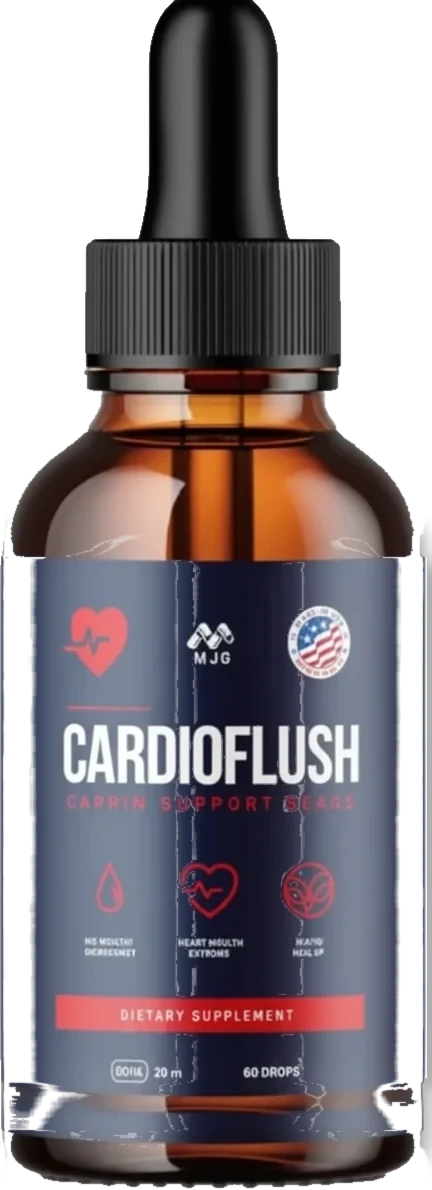
See the full Cardioflush label
Read every printed ingredient, serving size and caution before you decide.
Order Cardioflush