Gotu Kola and Butcher's Broom for Venous Circulation: What the Research Actually Shows
Quick Answer: What Do Gotu Kola and Butcher's Broom Actually Do?
Both are traditional venous-circulation botanicals with real, if modest, human trial support — and both sit inside Cardioflush's undisclosed 195mg proprietary blend alongside four other ingredients, with no printed standardization or milligram amount for either. Small clinical trials on a standardized triterpenic extract of gotu kola (Centella asiatica) have shown improved microcirculation and reduced ankle swelling in people with venous insufficiency. Separately, standardized butcher's broom (Ruscus aculeatus) extract, usually paired with other compounds in the tested formulas, has shown reduced leg swelling and improved venous tone in placebo-controlled trials. Neither body of research tells you anything about Cardioflush's specific extract, because the amounts and standardizations used in the studies are not the ones printed on this label.
- Gotu Kola: label lists "aerial" plant part; small trials on a standardized extract show microcirculation benefit.
- Butcher's Broom: label lists "leaf/stem"; trials on standardized extract (often combined with other compounds) show reduced leg swelling.
- Shared gap: no standardization percentage, no milligram amount, for either ingredient on this label.
What the label prints for each ingredient
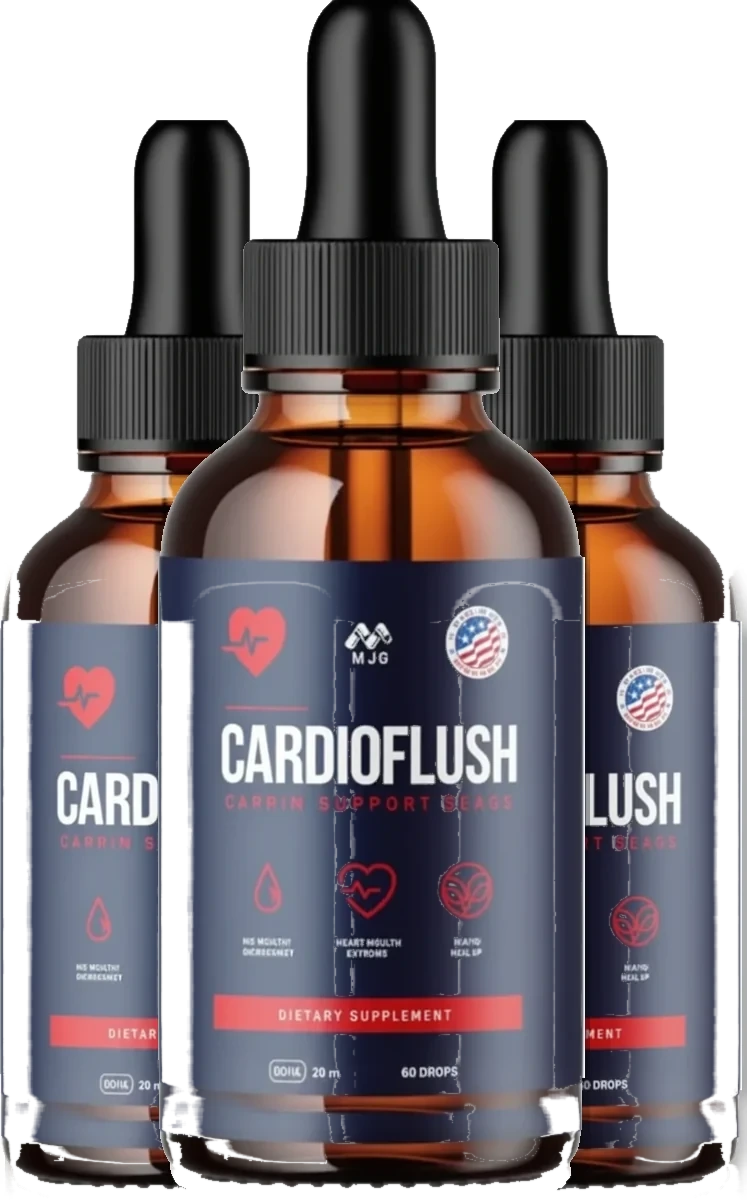
Cardioflush's Supplement Facts panel lists six botanicals inside a single 195mg "Proprietary Blend" per 2ml serving, in this printed order: Grape Seed Extract, Horse Chestnut Extract, Motherwort Extract, Hawthorn Berry Extract, Gotu Kola Extract, and Butcher's Broom Extract. Gotu Kola appears fifth, described as "Gotu Kola (Centella asiatica aerial) Extract" — meaning the extract is made from the above-ground parts of the plant, leaves and stems rather than the root. Butcher's Broom appears sixth and last, described as "Butcher's Broom (Ruscus aculeatus leaf/stem) Extract." Only two of the six blend ingredients — grape seed and horse chestnut, discussed in our companion piece on horse chestnut dose vs. trial evidence — carry a printed standardization percentage. Gotu kola and butcher's broom carry neither a standardization nor an individual milligram amount; both simply share the 195mg blend total with the other four ingredients, and their position at the end of the printed list suggests, under standard descending-order-by-weight labeling rules, that they are present in smaller amounts than the ingredients listed before them — though "smaller" is not a number.
Gotu kola (Centella asiatica): what the trials measured
Gotu kola is a low-growing plant used in traditional Ayurvedic and Southeast Asian medicine for wound healing and circulatory complaints. Its studied active fraction is a group of triterpenoid compounds (asiaticoside, madecassoside, asiatic acid and madecassic acid), often standardized and sold as a "total triterpenic fraction of Centella asiatica," abbreviated TTFCA in the research literature. Two related trials published in Angiology in 2001 tested this standardized fraction specifically in people with chronic venous insufficiency and related microangiopathy. One trial gave a standardized dose of the triterpenic fraction and measured capillary filtration rate and ankle swelling over several weeks, reporting a significant reduction in edema and improved capillary permeability compared with placebo.[1] A companion trial from the same research group used laser Doppler flowmetry, transcutaneous oxygen and carbon dioxide pressure measurements, and leg volumetry to assess microcirculation directly, and again found measurable improvement with the standardized extract compared with controls.[2] A broader clinical review of microcirculatory therapies in venous insufficiency, published in the International Journal of Lower Extremity Wounds, likewise discusses Centella asiatica's triterpenic fraction as one of the botanical options with supporting microcirculatory data, alongside other plant-derived venotonics.[3]
Doses in this line of research were generally modest — commonly in the range of 60–120mg per day of the standardized triterpenic fraction, split into two or three doses, over trial periods of several weeks to a few months. That is a meaningfully lower total milligram figure than the horse chestnut research discussed in our companion article, which is one reason gotu kola's position later in Cardioflush's ingredient list (implying a smaller share of the 195mg total) does not automatically rule it out as present in a plausible amount — unlike horse chestnut, where the trial-dose gap is much larger. Even so, "plausible" is not "confirmed": Cardioflush's label does not state a standardization or milligram figure for its gotu kola extract, so this remains an open question rather than a verified match.
Butcher's broom (Ruscus aculeatus): what the trials measured
Butcher's broom is a small evergreen shrub whose rhizome and stem have a long history of use in European phlebology (the medical study of veins) for leg heaviness and swelling. Its studied active compounds are steroidal saponins, principally ruscogenins, thought to constrict veins and reduce capillary permeability. Most of the higher-quality clinical trials on butcher's broom test it as part of a standardized combination product containing Ruscus extract alongside hesperidin methyl chalcone (a citrus flavonoid) and ascorbic acid (vitamin C) — a formulation different from Cardioflush's single-herb Ruscus extract, which is worth flagging plainly before citing the results.
A randomized, double-blind, placebo-controlled trial published in Arzneimittelforschung in 2002 tested this Ruscus-based combination in patients with chronic venous insufficiency over 12 weeks and found significant reductions in ankle and lower-leg circumference (a proxy for fluid swelling), alongside improved patient-reported symptoms such as heaviness and tiredness, compared with placebo.[4] A separate clinical and capillaroscopy-based study, published in International Angiology, evaluated a similar Ruscus-containing regimen and reported improvement in venous tone and capillary appearance under direct microscopic evaluation.[5] A further quality-of-life study in Latin American patients with venous insufficiency, also in International Angiology, reported improved self-reported symptom scores with a Ruscus-based treatment course, reinforcing the pattern of modest but repeatable benefit for leg swelling and comfort.[6]
Because nearly all of the controlled trial evidence for Ruscus aculeatus comes from combination products rather than the extract alone, it is difficult to isolate exactly how much of the observed benefit is attributable to butcher's broom by itself, as opposed to the added hesperidin methyl chalcone and vitamin C. Cardioflush's blend does not include either of those co-ingredients, which is a meaningful difference between the tested formulas and what is on this label.
Side by side: what each ingredient's research actually tested
| Gotu Kola (Centella asiatica) | Butcher's Broom (Ruscus aculeatus) | |
|---|---|---|
| Plant part studied / printed on label | Aerial parts (leaves, stems) | Leaf/stem |
| Studied active compounds | Triterpenoids (asiaticoside, asiatic acid, madecassic acid) | Steroidal saponins (ruscogenins) |
| Typical trial dose | ~60–120mg/day of standardized triterpenic fraction | Standardized extract, usually combined with hesperidin methyl chalcone + vitamin C |
| Main outcome measured | Capillary filtration, ankle edema, microcirculation | Ankle/calf circumference, venous tone, symptom scores |
| Cardioflush label standardization | Not printed | Not printed |
| Cardioflush label amount | Not printed (shares 195mg blend total) | Not printed (shares 195mg blend total) |
What neither body of evidence shows
Neither ingredient has been tested as part of a six-botanical liquid blend resembling Cardioflush. Neither has a large, modern, multi-center trial behind it — the studies above are small to moderate in size, mostly from a limited number of research groups, and none is a trial of the finished Cardioflush product. And critically, for both ingredients, the standardization and dose used in the cited research is not disclosed on Cardioflush's label, so there is no way to confirm this bottle contains anything close to a studied amount of either herb. That is not a claim that it doesn't — it is an honest statement that the information needed to check is simply not published.
Safety notes
In the cited trials, both gotu kola's triterpenic fraction and Ruscus-based combinations were generally well tolerated, with occasional reports of mild gastrointestinal discomfort, headache or skin irritation. Gotu kola has a longer traditional history of oral use; some sources note a theoretical concern about liver effects with prolonged high-dose use, which is part of why the label's general caution to check with a doctor before use if you have a medical condition is worth taking at face value, particularly for anyone with existing liver disease. Ruscus-based products' vasoconstrictive action is a reasonable topic to raise with a doctor if you have uncontrolled high blood pressure. As with every ingredient on this label, Cardioflush's own printed caution applies: check with a doctor before use if you are on medication or have a medical condition.
Medical note: this article describes research on isolated, standardized gotu kola and butcher's broom extracts, not a verified claim about Cardioflush's finished formula. It is general information, not medical advice. Speak to a healthcare professional before starting any new supplement, especially if you are pregnant, nursing, taking medication, or managing liver disease or a blood-pressure condition.
Scientific references
- Incandela L, Cesarone MR, Cacchio M, et al. — Total triterpenic fraction of Centella asiatica in chronic venous insufficiency and in high-perfusion microangiopathy, Angiology, 2001 Oct;52 Suppl 2:S9-13
- Cesarone MR, Belcaro G, Rulo A, et al. — Microcirculatory effects of total triterpenic fraction of Centella asiatica in chronic venous hypertension, Angiology, 2001 Oct;52 Suppl 2:S45-8
- Wollina U, Abdel-Naser MB, Mani R — A review of the microcirculation in skin in patients with chronic venous insufficiency, International Journal of Lower Extremity Wounds, 2006 Sep;5(3):169-80
- Vanscheidt W, Jost V, Wolna P, et al. — Efficacy and safety of a Butcher's broom preparation compared to placebo in patients suffering from chronic venous insufficiency, Arzneimittelforschung, 2002;52(4):243-50
- Aguilar Peralta GR, Arévalo Gardoqui J, Llamas Macías FJ, et al. — Clinical and capillaroscopic evaluation in the treatment of chronic venous insufficiency, International Angiology, 2007 Dec
- Guex JJ, Avril L, Enrici E, et al. — Quality of life improvement in Latin American patients suffering from chronic venous disorder, International Angiology, 2010 Dec
Related reading
- Horse chestnut (aescin) in Cardioflush: dose vs. trial evidence
- What "proprietary blend" means: how to read the Cardioflush label
- Heart supplement drops vs. capsules: what the dose form changes
- Heart supplement and drug interactions: a safety guide
Frequently asked questions
What part of the gotu kola and butcher's broom plants does Cardioflush use?
As printed on the label: Gotu Kola (Centella asiatica) Extract is made from the aerial (above-ground) part of the plant, and Butcher's Broom (Ruscus aculeatus) Extract is made from the leaf/stem. Neither ingredient carries a printed standardization or milligram amount; both sit inside the same undisclosed 195mg proprietary blend as the label's other four botanicals.
Does gotu kola help with venous circulation?
Small controlled trials using a standardized total triterpenic fraction of Centella asiatica, generally around 60–120mg per day, reported improved microcirculation measures and reduced ankle swelling in people with chronic venous insufficiency. These are small studies, and the extract used and its standardization are not necessarily the same as what is in any specific finished product.
Does butcher's broom help with venous circulation?
Randomized placebo-controlled trials of standardized Ruscus aculeatus extract, usually combined with hesperidin methyl chalcone and ascorbic acid, reported reduced leg swelling (ankle and calf circumference) and improved venous tone compared with placebo over several weeks.
Is Cardioflush's gotu kola or butcher's broom extract the same as the ones tested in trials?
That cannot be verified from the label. Cardioflush lists both as extracts of the stated plant part with no standardization percentage and no milligram amount, so there is no way to compare the extract in this bottle with the standardized extracts used in the cited research.
See the full Cardioflush label
Read every printed ingredient, serving size and caution before you decide.
Order Cardioflush