Heart Supplement Drops vs Capsules: How Dosing and Absorption Really Differ
Quick Answer: Are Drops Better Than Capsules?
Usually only slightly, and rarely for the reason the label implies. A liquid arrives already dissolved and a truly sublingual dose can skip first-pass liver metabolism, so the delivery form can matter. But for most heart-health ingredients there is no head-to-head human trial comparing the drop with the capsule, and the ingredient itself — not the bottle it comes in — decides how long anything takes to work. Choose the form you will actually take every day.
- Real advantage: easier to swallow, easier to adjust, no disintegration step.
- Overstated advantage: dramatic differences in absorption.
- What actually matters: the ingredient, the amount, and daily consistency.
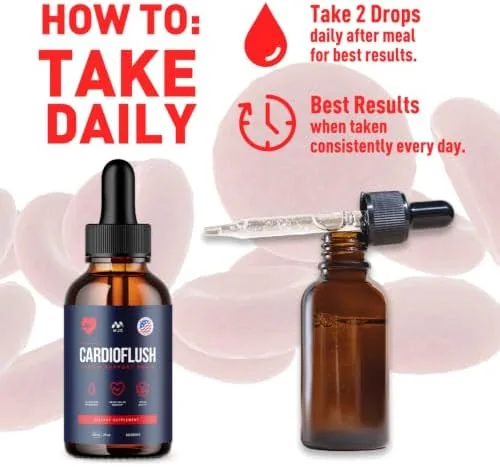
Do liquid heart supplement drops absorb better than capsules?
A liquid supplement is already in solution, so it skips a step that a tablet or capsule has to complete first: disintegration and dissolution in the stomach. In pharmacology that step is a genuine bottleneck for poorly soluble compounds, and removing it can mean a faster and slightly more predictable rise in blood levels. That much is real.
What does not follow is the leap most sales pages make. Absorption is only the first of several gates. The compound still has to survive the gut wall, pass through the liver, and reach a tissue where it does something useful. For most botanicals in a heart formula, the limiting step is not dissolution at all — it is how much active compound the extract contains in the first place, and how quickly the body clears it afterwards. Improving the first gate does very little if the third is the narrow one.
There is also a plainer problem: for the ingredients in this category, almost nobody has run the comparison. A head-to-head trial giving one group a liquid and the other a capsule of the identical standardised extract, then measuring blood levels and an outcome, is rare. Without that, any specific claim about a percentage improvement is an extrapolation rather than a finding.
What "sublingual" actually means, and when it applies
Sublingual means the dose is held under the tongue so the compound crosses the thin mucous membrane there and enters the bloodstream directly, bypassing the first pass through the liver that swallowed doses go through. It is a real route — it is how nitroglycerin works for angina, and it is why some medicines are formulated as films or lozenges.
But it is not a property of every liquid. A drop that you swallow is simply an oral dose in liquid form; it goes through the same digestive route as a capsule. For sublingual absorption to matter, the dose has to be held under the tongue long enough, and the molecule has to be small and fat-soluble enough to cross the membrane. Many supplement ingredients, including large plant polyphenols, are not good candidates. If a label instructs you to hold the dose under the tongue for a set time, follow it, but treat "sublingual" on the front of a bottle as a route description rather than a guarantee of superior absorption.
How to take heart-health drops properly
The instructions that make a measurable difference are unglamorous, and most of them are about ingredient chemistry rather than form.
- Measure with the dropper, not by eye. Dropper volume differs between products, and "a dropperful" usually means to the marked line, not the full pipette.
- Take fat-soluble ingredients with a meal. Coenzyme Q10 is the clearest case: it is a lipid-soluble molecule with famously poor and variable absorption, and pharmacokinetic reviews of CoQ10 describe absorption as slow and dependent on formulation, with food intake improving intestinal uptake. We go into the dosing detail in our guide to CoQ10 dosage and evidence.
- Do not rinse a nitrate-containing formula away with antibacterial mouthwash. Dietary nitrate only becomes useful after bacteria on the tongue reduce it to nitrite. In a randomised study, antibacterial mouthwash blunted oral nitrate reduction and raised blood pressure in treated hypertensive adults, and separate work confirmed the physiological role of nitrate-reducing oral bacteria in blood-pressure control. This is one of the few genuinely actionable "how to take it" findings in the whole category, and it applies to beetroot and dietary nitrate in any form.
- Pick one time of day and keep it. Steady daily intake matters more than morning versus evening for every ingredient discussed here.
- Check it against your prescriptions before the first dose, not after. Liquid form does not reduce interaction risk; if anything it makes dose creep easier. Our heart supplement and drug interaction guide covers the combinations that matter.
How many drops is a dose, and why the number varies
There is no universal drop count, and any article that gives you one without naming a specific bottle is guessing. Three things vary independently between products: the volume a dropper holds, the concentration of extract in that volume, and how many servings the manufacturer intends per bottle. Two formulas can both say "one dropperful daily" and deliver very different amounts of active ingredient.
The practical rule is to read the supplement facts panel on the bottle you own, note the stated serving size in millilitres or drops, and use the graduation mark on the pipette. If a panel lists a proprietary blend without per-ingredient amounts, you cannot compare it to a published trial dose at all — and you should treat any claim that it matches one with suspicion.
Drops vs capsules vs gummies: a straight comparison
| Liquid drops | Capsules or tablets | Gummies | |
|---|---|---|---|
| Dissolution step | Already dissolved | Must disintegrate first | Must dissolve, chewed |
| Dose precision | Depends on measuring carefully | Fixed per unit | Fixed per unit |
| Easy to swallow | Yes | A real barrier for some people | Yes |
| Sublingual route possible | Only if the label says so | No | No |
| Typical downside | Taste, spillage, dose drift | Pill burden | Added sugar, lower ingredient load |
The swallowing point is not trivial. Difficulty with, or aversion to, swallowing solid dose forms is common enough to affect whether people take their medicines at all, and a supplement you skip has an absorption rate of zero. That is the strongest honest argument for drops.
When a liquid genuinely has the advantage
Liquids earn their place in three situations. First, when swallowing capsules is unpleasant or difficult, which is common with age. Second, when you want to titrate — starting at half a dose and building up is trivial with a dropper and impossible with a sealed capsule. Third, when a formula is genuinely designed for sublingual use and the label tells you to hold it under the tongue.
When a capsule is the better choice
Capsules win on dose precision, on stability, and on ingredient load. A capsule delivers the same amount every time without depending on how carefully you squeeze a pipette. Many botanical extracts and oils are also more stable in a sealed capsule than in a liquid that is opened daily and stored on a warm shelf. And when a trial dose runs to hundreds of milligrams — as it does for magnesium, which we cover in our magnesium and blood pressure guide — fitting that amount into a few drops is chemically difficult.
Does the form change how fast it works?
Barely. What changes the timeline is the ingredient. Dietary nitrate can move a blood-pressure reading within hours in either form; a meta-analysis of medium-term nitrate supplementation found the effect persists over longer dosing periods too. Coenzyme Q10, magnesium and garlic behave differently: their trials generally run for weeks before measuring anything, because the change being measured is a slow one. Switching from a capsule to a drop does not compress that biology, and we set out the realistic windows ingredient by ingredient in how long heart supplements take to work.
Common dosing mistakes
- Doubling up after a missed day. None of these ingredients works on a cumulative-debt model, and doubling a dose that affects blood pressure or clotting is the wrong direction to experiment in.
- Comparing bottles by drop count instead of milligrams. Drops are a volume, not a dose.
- Storing a liquid badly. Heat and light degrade many plant compounds faster in solution than in a sealed capsule.
- Judging the result without measuring anything. If the goal is blood pressure, take readings properly and consistently; home blood-pressure monitoring guidance exists precisely because casual one-off readings mislead. Our guide to lowering blood pressure naturally covers what else to change alongside.
What the evidence does not support
Three claims are worth refusing outright. That a liquid is "up to five times better absorbed" — a figure with no head-to-head trial behind it for these ingredients. That sublingual delivery lets a smaller amount do the work of a larger one, which would require pharmacokinetic data almost no supplement has. And that any delivery form makes a supplement a substitute for prescribed treatment; it does not, in any form, and the botanicals themselves have their limits, as we set out in the hawthorn, hibiscus and beetroot evidence review.
Medical note: this article is general information, not medical advice. Dosage instructions on the product you own always override general guidance. Speak to a healthcare professional before starting any supplement, especially if you are pregnant, nursing, or taking medication for blood pressure, cholesterol or clotting. Chest pain or pressure, a heartbeat that races or flutters, fainting or near-fainting, or sudden breathlessness are emergency symptoms — call your local emergency number or go to an emergency department rather than reaching for a supplement.
Scientific references
- Bhagavan HN et al. — Coenzyme Q10: absorption, tissue uptake, metabolism and pharmacokinetics, Free Radic Res 2006
- Ochiai A et al. — Improvement in intestinal coenzyme q10 absorption by food intake, Yakugaku Zasshi 2007
- Bondonno CP et al. — Antibacterial mouthwash blunts oral nitrate reduction and increases blood pressure in treated hypertensive men and women, Am J Hypertens 2015
- Kapil V et al. — Physiological role for nitrate-reducing oral bacteria in blood pressure control, Free Radic Biol Med 2013
- Ashor AW et al. — Medium-term effects of dietary nitrate supplementation on systolic and diastolic blood pressure in adults: a systematic review and meta-analysis, J Hypertens 2017
- McCloskey AP et al. — Identifying and addressing pill aversion in adults without physiological-related dysphagia: A narrative review, Br J Clin Pharmacol 2022
- Weinfeld JM et al. — Home Blood Pressure Monitoring, Am Fam Physician 2021
Related reading
- How long do heart supplements take to work?
- CoQ10 for heart health: dosage, benefits and evidence
- Beetroot, nitrate and nitric oxide for blood pressure
- Heart supplement and drug interactions: a safety guide
Frequently asked questions
Do heart supplement drops absorb better than capsules?
Sometimes, but the advantage is smaller and less certain than marketing suggests. A liquid is already dissolved, so it skips the disintegration step a tablet or capsule has to go through, and a genuinely sublingual dose can bypass first-pass liver metabolism. For most heart-health ingredients, though, there is no head-to-head human trial comparing the drop and the capsule of the same ingredient, so the honest answer is that the form is a convenience and consistency decision more often than an absorption one.
How do you take heart-health drops correctly?
Follow the label first, because concentration varies enormously between products. In general: measure with the dropper rather than pouring, hold the dose under the tongue if the label says sublingual, take fat-soluble ingredients such as CoQ10 with a meal containing some fat, and take it at the same time every day. Avoid rinsing immediately afterwards with an antibacterial mouthwash if the formula relies on dietary nitrate.
How many drops is one dose?
There is no universal answer, and any figure quoted without naming a specific product is meaningless. A dropper's volume, the concentration of the extract and the number of servings per bottle all differ between formulas. Read the supplement facts panel on the bottle you actually own and use the marked graduation on the dropper rather than counting drops by eye.
Should heart supplements be taken with food?
It depends on the ingredient. Fat-soluble compounds such as coenzyme Q10 are absorbed better when taken with a meal that contains fat. Magnesium is often better tolerated with food because it is less likely to upset the stomach. Dietary nitrate does not need a meal. If a product combines several of these, taking it with a meal is usually the safer default.
Do drops work faster than capsules?
Faster to enter the bloodstream, in some cases. Not faster to produce a result you can measure. Dietary nitrate can shift a blood-pressure reading within hours regardless of form, while ingredients such as CoQ10, magnesium and garlic need weeks of consistent daily use before their effects show up in trials. Changing the delivery form does not shorten that biological timeline.
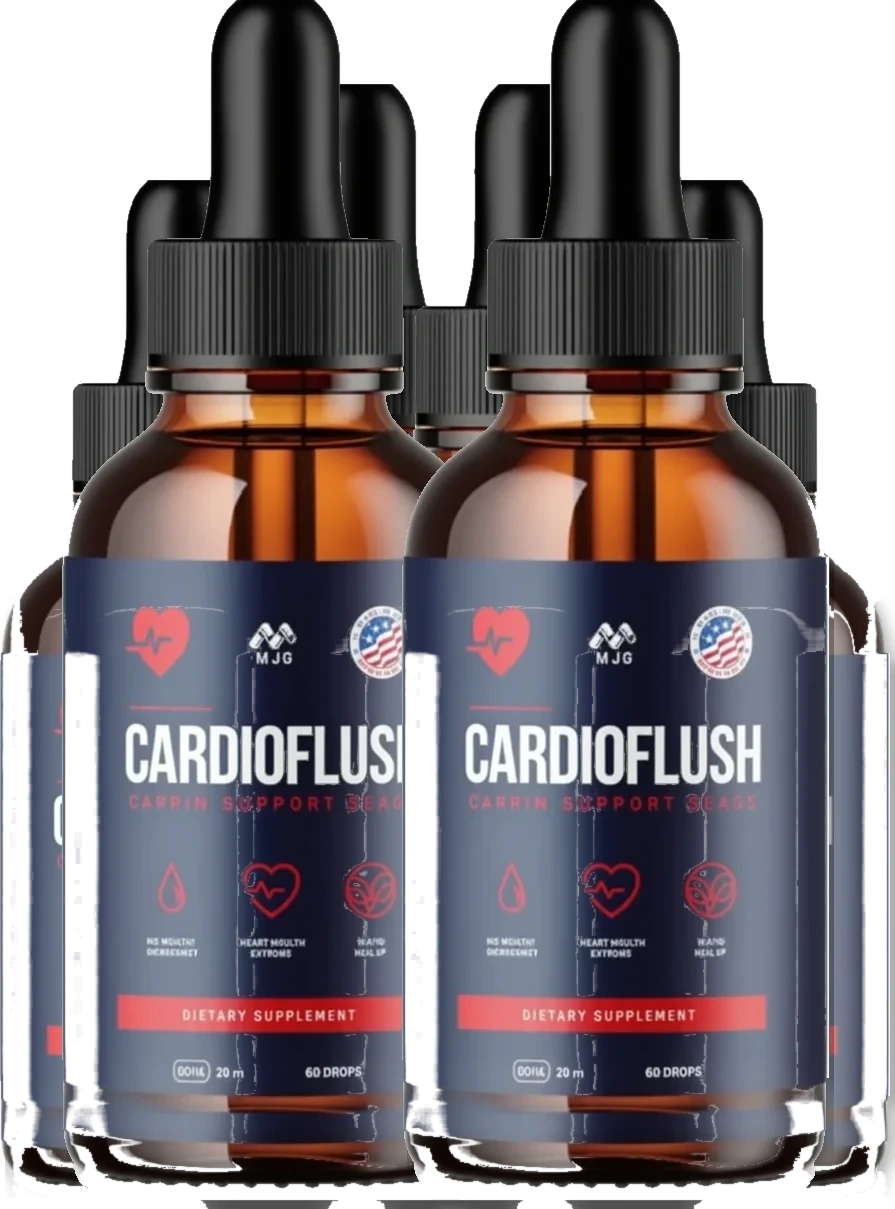
How Cardioflush is taken
Cardioflush is sold as a daily liquid dropper. Our main page lists the ingredients, the directions on the label and the pricing in full.
See the full Cardioflush breakdown