7 Heart Health Supplement Myths, Debunked
Quick Answer: What Should You Ignore About Heart Supplements?
Ignore any claim that a supplement unclogs arteries or dissolves calcified plaque, that natural means automatically safe, or that more is better. Supplements can support cardiovascular structure and function, but they never replace prescribed medicine, and label doses often differ from studied doses. Read critically and involve your clinician.
- Biggest myth: nothing in a capsule reverses established plaque.
- Safety: natural still interacts with drugs and can harm at high doses.
- Dose reality: more is not better; labels may not match trials.
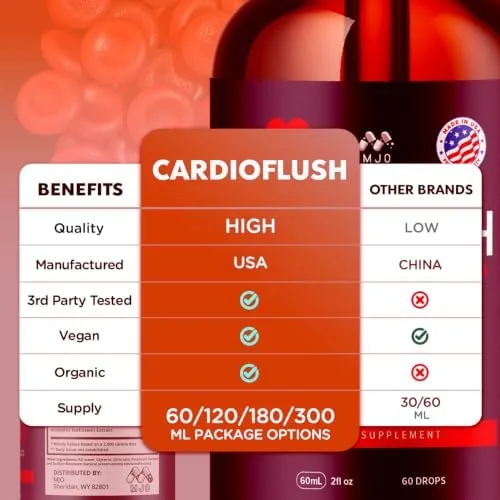
Heart-health supplements are a huge market, and where there is money there is exaggeration. Plenty of products contain genuinely well-studied ingredients, but the way they are marketed often outruns the science by a wide margin. Below are seven of the most persistent myths, each held up against what the evidence actually supports. The goal is not to dismiss supplements, it is to help you use them for what they can do and not be sold on what they cannot.
Myth 1: A supplement can unclog your arteries
This is the big one, and it is simply not true. Established atherosclerotic plaque, especially the calcified kind, is a structural change in the artery wall built up over years. No supplement has been shown to dissolve it or "flush" it away, regardless of how the product is named. Terms like unclog, cleanse or detox are marketing language, not clinical findings. Some nutrients may support healthy blood pressure, cholesterol handling or circulation, which is worthwhile, but supporting those functions is a completely different claim from reversing physical plaque. Existing artery disease is managed with medical care.
Myth 2: Natural means safe
"Natural" is one of the most misleading words on a label. Botanicals are chemistry too, and they can interact with prescription drugs, thin the blood, raise or lower blood pressure, and stress the liver or kidneys at high doses. Some of the most powerful drugs in history came from plants. Because supplements are regulated more loosely than medicines, purity and dose can also vary between brands and even batches. Safety is a function of the specific ingredient, its dose, your health and your other medications, never of the word natural on the front of the bottle.
Myth 3: If some is good, more is better
Nutrients rarely work on a straight line. For many of them the relationship looks like a curve: a sensible amount helps, and beyond a certain point extra doses add risk without adding benefit. Fat-soluble vitamins and some minerals can build up to harmful levels because the body cannot easily excrete the excess. The benefits reported in trials came from particular dose ranges, so doubling up to chase faster results usually just raises your odds of side effects and interactions. Respect the studied dose rather than treating it as a floor.
Myth 4: Supplements can replace heart medication
This myth is not just wrong, it is dangerous. Medicines like statins and blood-pressure drugs are prescribed because large trials show they reduce actual events. Supplements may support the structure and function of the cardiovascular system, but they have not demonstrated the same protective outcomes, and none is an equivalent swap for a prescription. Stopping a proven medication in favour of a capsule can quietly raise your risk. If you want to reduce your reliance on a drug, that is a goal to pursue with the clinician who prescribed it, through lifestyle and monitoring, not a unilateral switch.
Myth 5: The label dose matches the studied dose
Two products can share an ingredient name and deliver very different things. The benefits you read about were tied to a specific form, dose and sometimes a standardised extract used in the research. A supplement may contain far less of the active compound than trials used, or a different form that is poorly absorbed, or an eye-catching "proprietary blend" that hides how little of each ingredient is present. Always compare the amount on the label to what the studies actually used, and be wary of blends that will not tell you the individual doses.
Myth 6: A "clinically proven" blend means the product was tested
Marketing often borrows the credibility of research that was done on a single ingredient, then applies it to a whole multi-ingredient product that was never tested as a formula. "Clinically studied ingredient" usually means one component has some research behind it, not that the finished product, at its specific doses and combination, was trialled and shown to work. It is a reasonable starting signal that an ingredient is worth considering, but it is not proof the product in your hand delivers the same result. That gap between an ingredient study and a product claim is easiest to see when you read the actual trials, as we do for hawthorn, hibiscus, garlic and beetroot nitrate.
Myth 7: Supplements work fast
People often abandon a supplement after a week, or credit it after a few days, and both reactions misread the biology. Where nutrients have measurable effects, on things like blood pressure or blood lipids, the trials that found them typically ran 8 to 12 weeks or longer. Blood levels of a nutrient may rise quickly, but the downstream changes people care about build slowly. A fair personal trial is measured in months of consistent use, alongside the fundamentals, not in the first few doses.
Myth versus reality at a glance
| Common claim | What the evidence supports |
|---|---|
| "Unclogs arteries" | May support blood pressure or circulation; does not reverse plaque |
| "100% natural, so safe" | Can interact with drugs and harm at high doses |
| "Take extra for faster results" | Benefits sit in a dose range; more adds risk |
| "Replaces your medication" | Supports function; never replaces proven drugs |
Why these myths are so sticky
It is worth asking why heart-supplement myths survive despite being easy to disprove. Part of the answer is that they are emotionally appealing. The idea that a single natural capsule could clear your arteries or let you skip a daily pill is far more attractive than the honest message, which is that boring, sustained habits do most of the work. Part of it is the structure of the market: supplements can be sold with structure-and-function language ("supports healthy circulation") that sounds clinical without requiring the kind of outcome trials a drug must pass. And part of it is genuine confusion, because some ingredients really do have research behind them, which makes the leap to exaggerated claims feel plausible.
Testimonials add another layer. A glowing personal story is persuasive, but it cannot distinguish the supplement from everything else that changed at the same time, from a new diet to the natural ebb and flow of how people feel. That is exactly what controlled trials are designed to sort out, and why a single before-and-after anecdote, however sincere, is weak evidence. Recognising these forces does not mean rejecting supplements wholesale; it means reading their marketing with the same scepticism you would apply to any other advertisement.
A simple checklist for choosing wisely
You do not need a pharmacology degree to be a smarter buyer. Before spending money, run a product through a few quick questions. Does the label state the exact amount of each active ingredient, or does it hide them inside a proprietary blend? Do those amounts match what the research actually used, in the same form? Does the marketing stick to modest structure-and-function language, or does it promise to cure, reverse or unclog? Is there a plausible mechanism, and is the ingredient one you could not simply get more cheaply from food? And crucially, does anything you take interact with your medications?
Finally, keep the hierarchy straight. The interventions with the strongest evidence for your heart are not sold in bottles: not smoking, staying active, eating a largely plant-forward diet, sleeping well, managing weight and taking any prescribed medication as directed. A well-chosen supplement can sit on top of that foundation as a modest support. It can never be the foundation itself, and any product that suggests otherwise has already told you something important about how much to trust it.
Medical note: this article is general information, not medical advice, and no supplement is intended to diagnose, treat, cure or prevent any disease. Never stop or change a prescribed medication on your own. Talk to a healthcare professional before starting any supplement, especially if you take medication or manage a heart condition. Chest pain or pressure, a heartbeat that races or flutters, fainting or near-fainting, or sudden breathlessness are emergency symptoms — call your local emergency number or go to an emergency department rather than reaching for a supplement.
The bottom line
Heart supplements are neither magic nor useless; they are modest tools that can support a heart-healthy life when chosen well and used realistically. The myths worth discarding all share a theme: they promise more than a capsule can deliver. Nothing unclogs arteries, natural is not a safety guarantee, more is not better, and no supplement replaces medicine that is proven to save lives. Read the label against the research, keep your clinician in the loop, and put your real effort into the fundamentals that move the needle most.
Frequently asked questions
Can supplements really unclog arteries?
No. No supplement has been shown to dissolve calcified plaque or unclog arteries, and any product claiming to do so is overstating the evidence. Some nutrients may support healthy blood pressure, cholesterol handling or circulation, which is different from reversing established plaque. Existing atherosclerosis is managed medically, and structural changes to arteries are not something a capsule reverses.
Are natural heart supplements always safe?
No. Natural does not mean harmless. Botanicals and nutrients can interact with medications, affect bleeding, alter blood pressure, or stress the liver at high doses. Supplements are also less tightly regulated than drugs, so quality and dosing vary between products. Safety depends on the specific ingredient, dose, your health and your medications, not on whether something is labelled natural.
Is more of a supplement always better?
No. More is often worse. Many nutrients follow a curve where a sensible dose helps and megadoses add risk without extra benefit, and some fat-soluble vitamins and minerals accumulate to harmful levels. Studied benefits come from specific dose ranges, so exceeding them tends to raise the chance of side effects and interactions rather than improving results.
Can supplements replace heart medication?
No. Supplements can support the structure and function of the cardiovascular system, but they do not replace prescribed medicines that are proven to reduce events, such as statins or blood-pressure drugs. Stopping a prescription in favour of a supplement can be dangerous. Any changes to medication should only be made with the clinician who prescribed it.
Scientific references
- NIH Office of Dietary Supplements — dietary supplement fact sheets
- NIH NCCIH — High Blood Pressure and Dietary Supplements
- U.S. FDA — Dietary Supplements overview and regulation
- Jenkins DJA et al. — Supplemental Vitamins and Minerals for Cardiovascular Disease Prevention and Treatment: JACC Focus Seminar, J Am Coll Cardiol 2021
- Abdelhamid AS et al. — Omega-3 fatty acids for the primary and secondary prevention of cardiovascular disease, Cochrane Database Syst Rev 2020
Related reading
See how Cardioflush lays out its ingredients and evidence
A daily cardiovascular formula built around studied botanicals and circulation support — with every ingredient and its evidence laid out, no unclogging claims.
Order Now